 Located in the city of Guwahati in Assam, India (26.166426°N / 91.705509°E), the Kamakhya Temple along with a network of temples dedicated to the Mahavidyas and other deities denoted as the Kamakhya Temples’ Complex, is the world’s most important, revered and vibrant site among the 51 Shakti Peethas.
The Kamakhya Temple is surrounded by the Temples and Peetha of the 7 Devis of the Dasa Mahavidyas (10 Great Goddesses), other Goddesses, Shivas, Ganeshas, Vishnu, other deities and sacred sites, scattered all over the Kamakhya Temples’ Complex. It is interesting to note that, inside the sanctum sanctorum of the Kamakhya Temple, peethas of three Mahavidyas of the Dasa Mahavidyas are located, i.e. the third Mahavidya Tripura Sundari or Sodasi, the ninth Mahavidya Matangi and the tenth Mahavidya Kamala. The Kamakhya Temples’ Complex is the only sacred site where Temples and Peetha of the Dasa Mahavidyas are located adjacent to each other.
The sacred site that popularly known Kamakhya, actually is a hill system comprising of three segments (i.e. Brahma, Shiva and Varaha hill) referred to in the scriptures mostly as Nilachal and in some scriptures as Kamagiri, Mahagiri, Kamakhya Yonimandala and Kamakuta. Thus, the sacred landscape of Kamakhya Temples’ Complex is a delicately conceptualized and intrinsically interconnected network of peethas, shrines, sacred ponds, other sacred sites, etc. keeping Kamakhya Temple as the focal point.
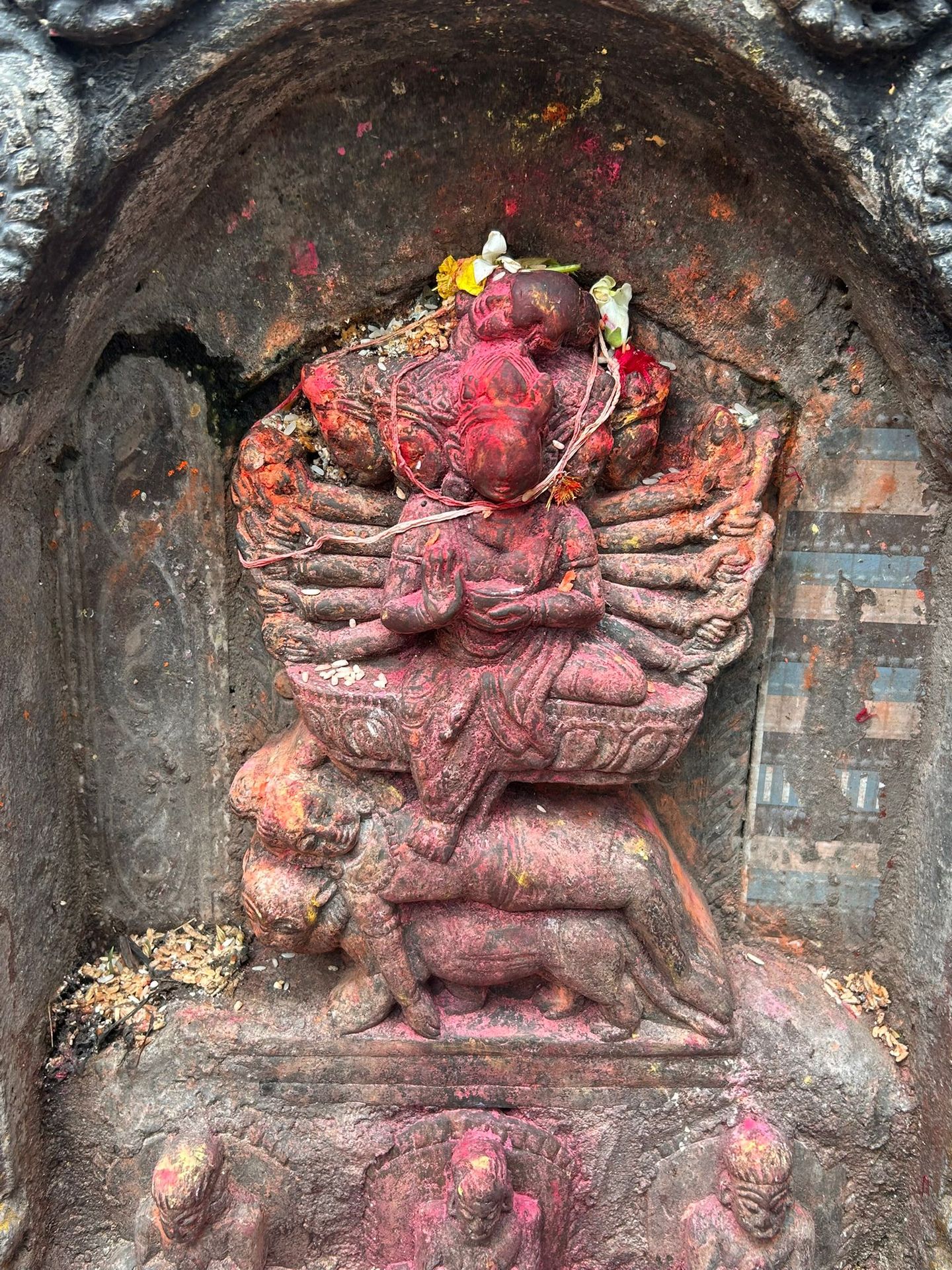
There is no idol (Murti) in the sanctum sanctorum of the Kamakhya Temple — it is just a stone and flowing water.
There is no idol (Murti) in the sanctum sanctorum of the Kamakhya Temple, it is just a stone and flowing water. The peethas of the other Mahavidyas (except Goddess Tara), Shiva and other Devi are identically similar in nature to that of the peetha of Devi Kamakhya.
Kamakhya as a pilgrimage center for Hindus, Buddhists and practitioners of various streams of Tantrism, has developed a uniquely syncretic religious culture. Millions of devotees from all over the world visit the Kamakhya Temples’ Complex every year.
The history of the Kamakhya Temples’ Complex is obscure and inter-mixed with oral history, mythology and legends through the advent of the Koch Kingdom. The story of the creation of the Kamakhya Yoni Peetha or Kamakhya Yonimandala and the story of Naraka (a king of Pragjyotispura) as mentioned in the Kalikapurana and Yoginitantra are significant.
Departments of geo-sciences and archaeology as well as several eminent scholars have suggested that the Kamakhya Temple was originally constructed in the 8th century during the rule of the Pala dynasty in Kamrup. King Bishwasingha (1515–1540 CE) rebuilt the Kamakhya Temple. It is assumed that the temple rebuilt by King Bishwasingha was destroyed by the invading Muslim commander Kalapahar in 1553 CE. After the destruction, King Naranarayana (1540–1587 CE) started rebuilding the present Kamakhya Temple in 1555 CE and completed it in 1565 CE.
Myths and legends are repositories where important historical information and references are delicately hidden. Hence, the myths and legends can be sensibly used as a tool for unearthing and reconstructing historical truth.
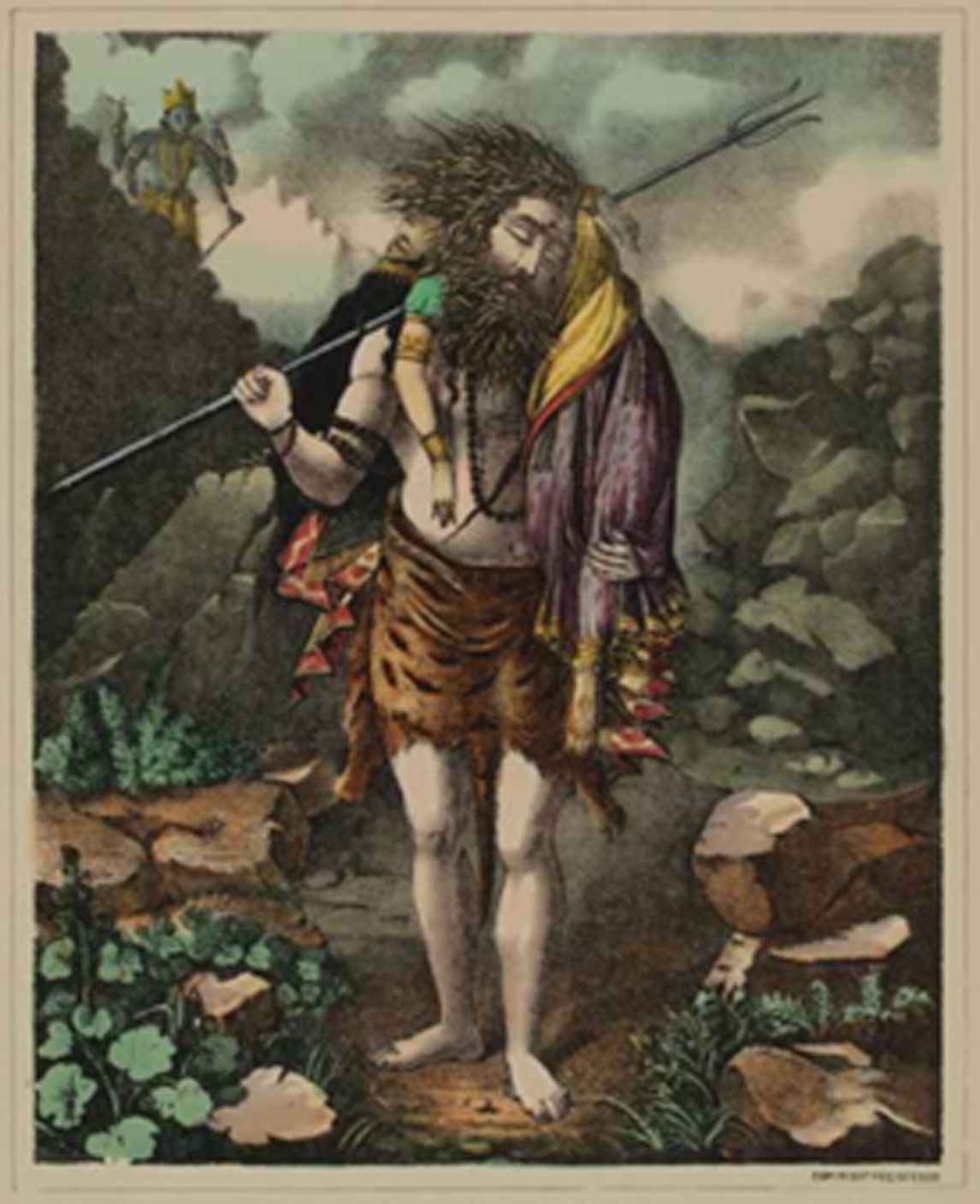 The Kamakhya Mandir is intricately linked with the mythological legend of Sati, the first wife of Lord Shiva and her father Daksha. The legend has been delicately elaborated in the Kalikapurana and according to the myth, King Daksha organized a grand Yagya (fire sacrifice) and invited all the Gods & Kings from the Tribhuvana. As Daksha could not tolerate his daughter’s husband Shiva, he intentionally excluded Shiva and Sati. Sati came to know about the insult and pressed Shiva to permit her to attend her father’s Yagya. When Shiva did not allow Sati to attend the Yagya, in rage, Sati, transformed herself into Goddess Kali. Witnessing the transformation of Sati into Goddess Kali, Shiva was forced permit Sati to attend her father’s Yagya.
At the Yagya, Daksha humiliated Sati by using insulting words in from of the crowd. Unable to bear the insult to her husband, Sati self-immolated in the sacrificial fire. Shiva came to know about the incident and arrived at the palace of Daksh and destroyed the Yagya. Shiva was enraged and, in his grief, carried Sati’s body on his shoulder and started roaming around in universe in Tandava (cosmic dance of destruction). To quell Shiva’s Tandava and save the universe from the impending apocalypse, in consultation with Brahma, Vishnu intervened, and with the divine Sudarshana Chakra severed Sati’s body into 51 pieces. These pieces fell on the earth transformed into Shakti Peethas. These Peethas are scattered across the Indian subcontinent.
Sati’s Yoni (vulva) fell the site of the Kamakhya Temple and the entire site transformed into a Yonimandala, making it one of the most significant and vibrant Shakti Peethas.
Gripped by intense grief of the self-immolation of his consort Sati in the sacrificial fire of her father Daksha, Lord Shiva alienated himself from all activities and went into the state of meditative mourning. Due to this, the creative process of the universe came to a halt and caused great alarm and concern for all the Gods. The Gods then devised a plan to ameliorate this situation and sent Kamadeva (a Cupid), to awaken Lord Shiva again from the state of his meditative mourning so that he can again engage himself in the passion of creation. At this disturbance caused by Kamadeva during the state of his meditative mourning, Lord Shiva became furious and burnt Kamadeva into ashes by the angry glance of his third eye. Satisfied with the prayer of Rati, Lord Shiva brought Kamadeva back to life with all his original grace and beauty. According to the promise made by Rati, Kamadeva erected the Kamakhya Temple with the help of the celestial architect Visvakarma on the Yoni of Sati on the Nilachala (Kamakhya).
Naraka ruled Pragjyotishpura. He was a good ruler and strictly adhered to the injunctions of his father and worshipped the Devi Kamakhya very devotedly. Devi Kamakhya was satisfied with the dedication of Naraka and one day, She appeared before him. Seeing her unparalleled beauty and charm, Naraka got totally captivated and proposed to marry her. Instead of getting enraged, the goddess gave her consent to Naraka, with a condition. If Naraka constructed a temple, a tank and a masonry road (stone pathway) from the foot of the hill on the western side of Kamakhya near the banks of the river Brahmaputra to the top of the Kamakhya Hill within a single night before the dawn, only then would She marry him. As he almost completed the construction, the goddess made a cock crow, declaring the daybreak. The break of dawn signaled the end of the time which was given to Naraka to complete the task. Devi Kamakhya therefore refused to marry Naraka.
 The land of Kamrup, characterized by its beautiful landscape of hills and wetlands, the mighty river Brahmaputra, rich natural resources and the lush vegetation has played an important role in the history and evolution of a unique religious tradition and culture that flourished here. In the Guwahati area of this Kamrup, on the Nilachala hills (Kamakhya Hill), peetha of the Devi Kamakhya is located, surrounded by the Mahavidyas, other Goddesses, Pancha Shivas, Mahakala & Dwarpala Ganeshas, Vishnu, other deities, sacred ponds and numerous sacred sites, scattered all over the hill.
Devi Kamakhya in the form of one of the Dasa Mahavidyas is worshipped as Tripura Sundari or Sodasi. Devi Kamakhya is also called bhagavati, who possesses bhaga or the yoni, the creative force and worshiped in the form of a rock (the peetha) inside a dark cave (the garbhagriha), perpetually wet from a stream of water.
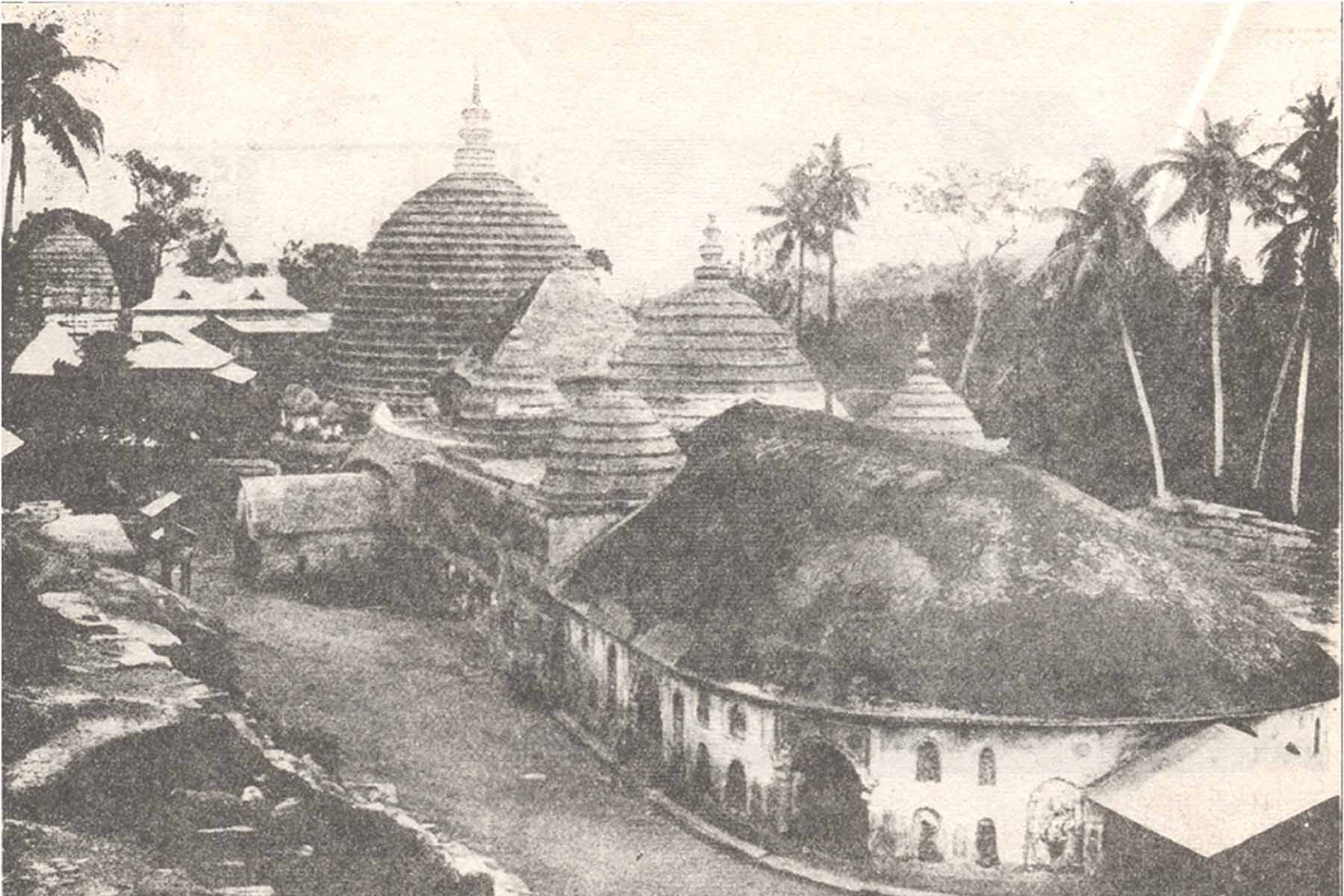 The history of Kamakhya Temples’ Complex is obscure and inter-mixed with inadequate historical records, oral history, mythological texts, legends, folk-lore, etc. till the advent of the Koch Kingdom. The countless pieces of sculpted stone that are lying scattered all over the Nilachal hills bear mute testimony to the beauty of the original stone temple of Kamakhya.
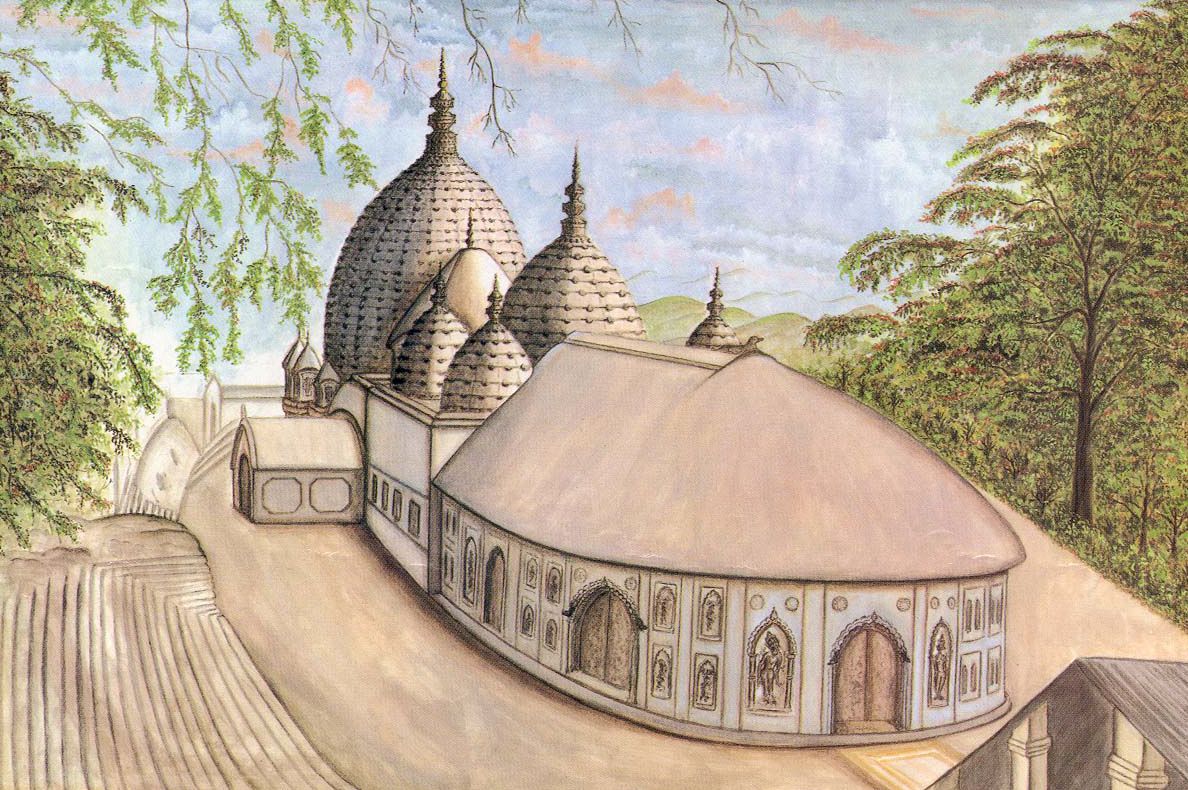
The Architecture of Kamakhya Temple and the network of temples of the Kamakhya Temples’ Complex is a fusion of Nagara and indigenous style of Temple Architecture. The Kamakhya Temple is cruciate ratha type of Bada upon which a polygonal bulbous dome called Garbha Griha, Chalanta, Pancha Ratna, Nat Mandir are strategically placed.
.jpg) Structural Components of Kamakhya Temple
Structural Components of Kamakhya Temple
The structural composition of the Kamakhya Temple is: Garbha Griha, Chalanta, Pancha Ratna, Nat Mandir. There are 3 access gates to the Kamakhya Temple: North Gate (Shakti Smridhi Dvara), West Gate (Moksha Dvara) and West Gate (Anpurna Dvara).
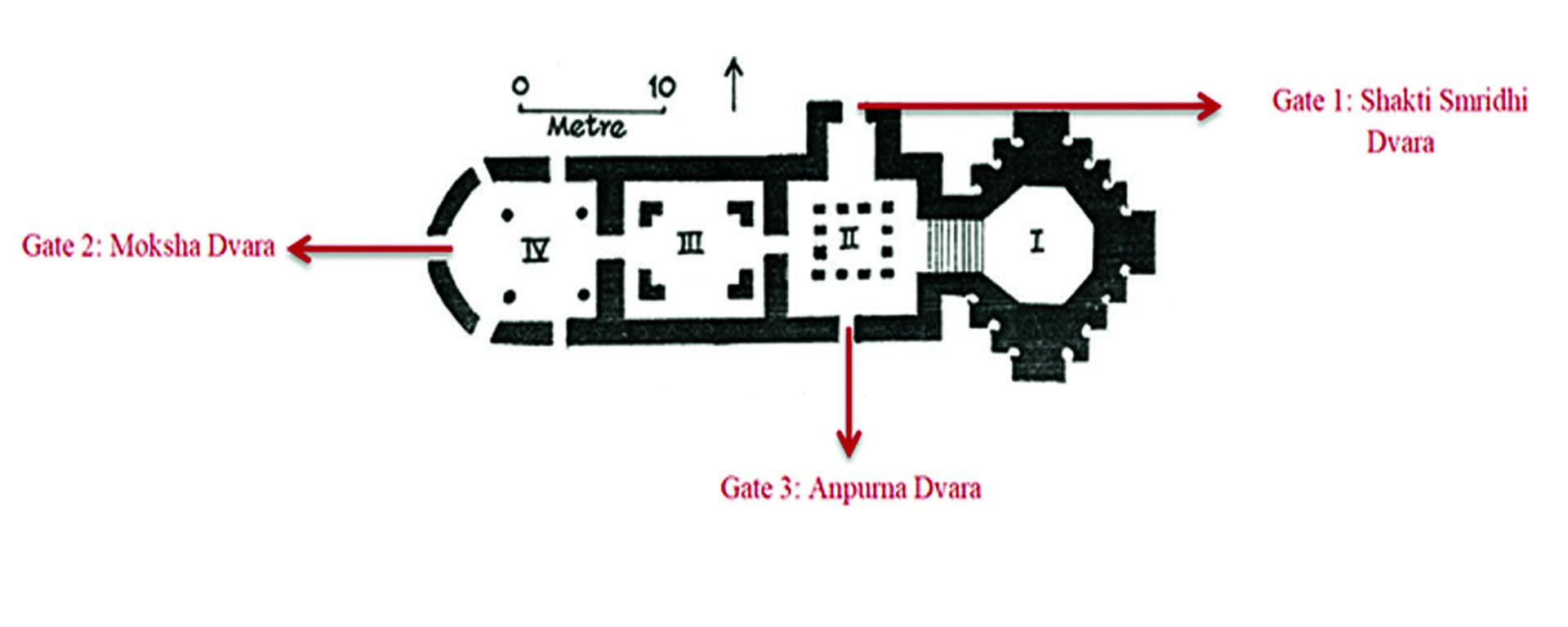 Structural Plan of Kamakhya Temple
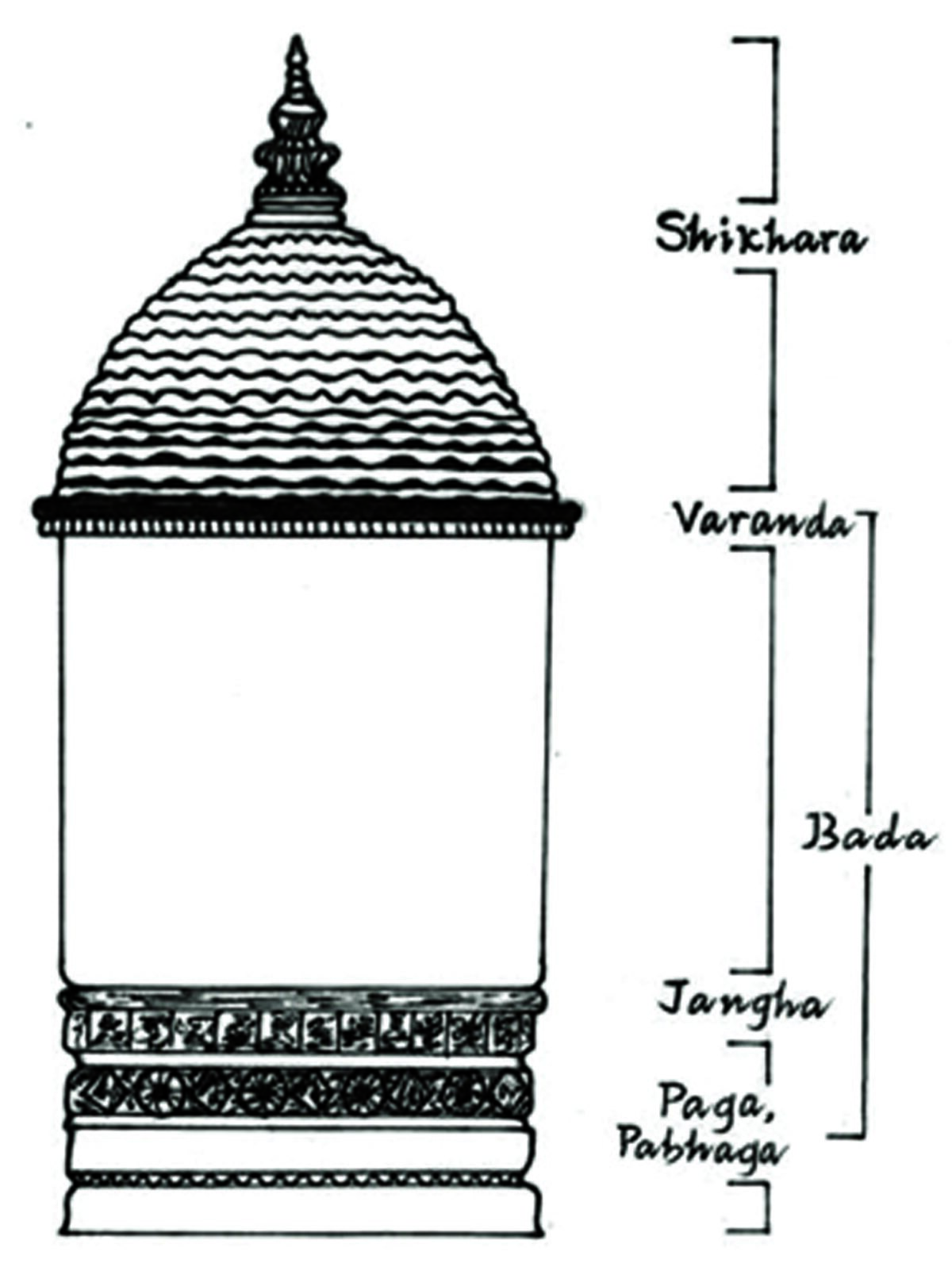 Garbha Griha
The Garbha Griha houses the Peetha of Devi Kamakhya (Devi Tripura Sundari), Devi Matangi (Devi Saraswati) and Kamala (Devi Lakshmi) the main deity. The Garbha Griha is a small cave like dark space below the ground level with a narrow stone stair from the Chalanta area.
Chalanta
The Chalanta hall houses the movable idol of Devi Kameshwari & Kameshwara in a Simhasana, Batuk Bhairava, stone inscriptions of King Naranayana and Chilarai and other curious sculptures. Chalanta hall is built on 12 pillars at the centre arranged in a rectangular manner.
Pancha Ratna
Pancha Ratna hall is square chamber alike Chalanta. Pancha Ratna houses the idol of Devi Chamunda, alter of Devi Manasa and the walls are adorned with curious sculptures.
Nat Mandir
Nat Mandir has an apsidal frontage and a ridged roof similar to Ranghar complex of the Ahom Kingdom located in Sivasagar. The space of the Nat Mandir is still used for the annual Debaddhani Ritualistic Dance Festival.
The most important scriptures or texts related to Kamakhya Temples’ Complex of Nilachala hills are as follows:
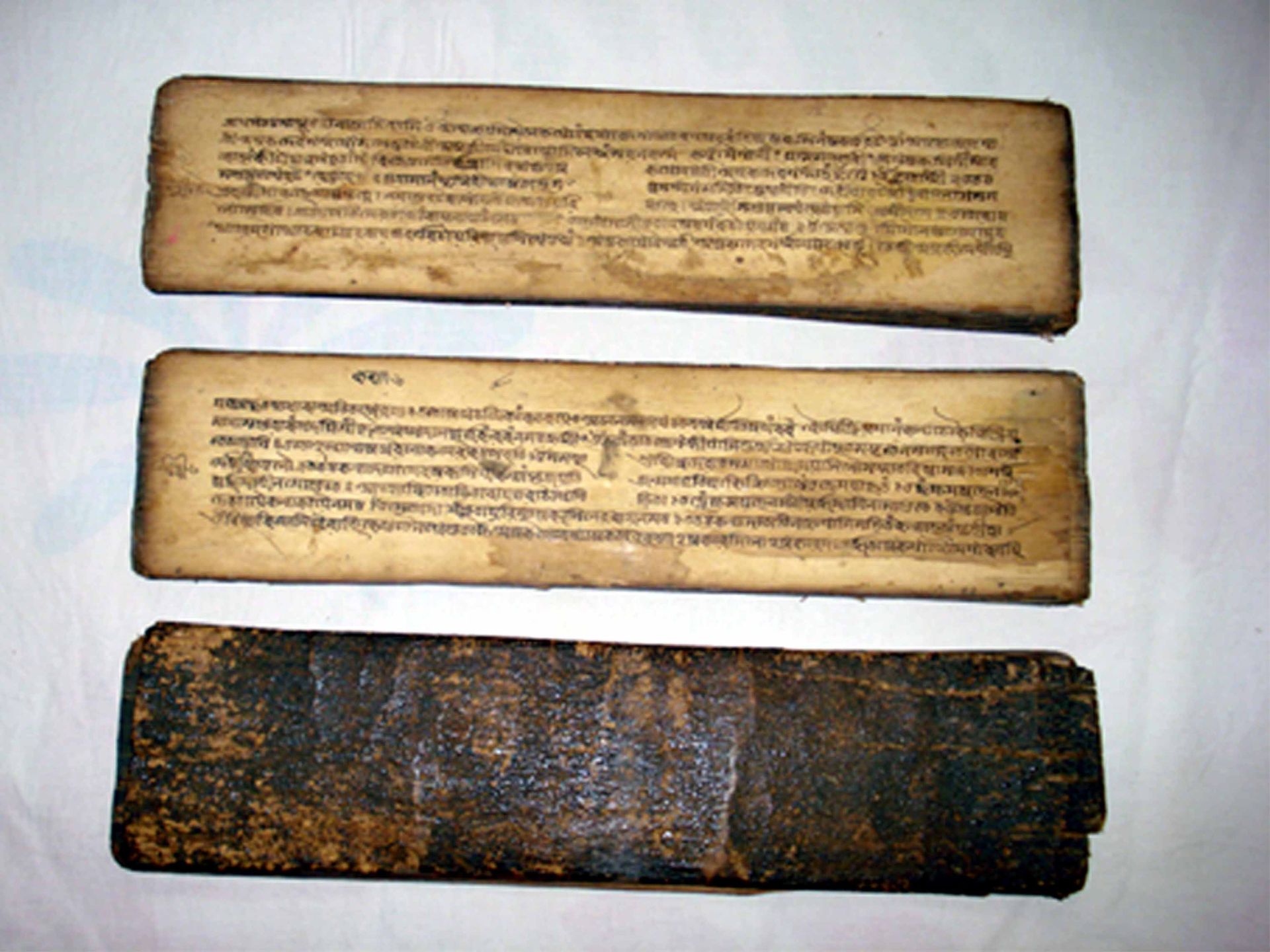 Kalikapurana (Compiled during 9th Century CE) contains elaborate details on Kamakhya Temples’ Complex and Kamrup.
Yogini Tantra (Compiled during 16th Century CE) contains elaborate details on Kamakhya Temples’ Complex and Kamrup.
Kamakhya Tantra (Compiled during 16th–17th Century CE) contains elaborate details on Kamakhya Temples’ Complex.
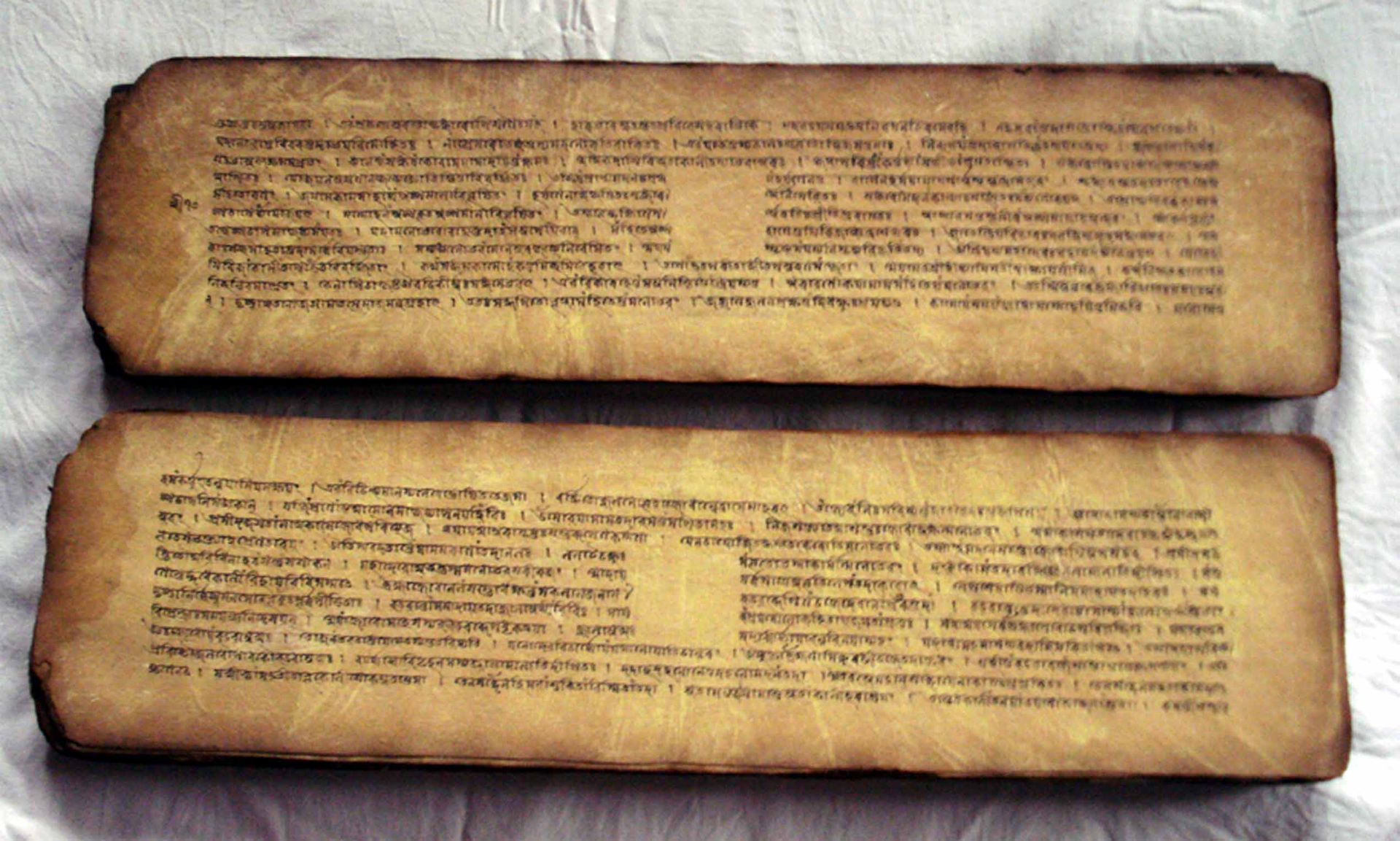 Harivamsa (compiled as a supplement to the Mahabharata during 1st–2nd Century BCE) contains myths and legends associated with Naraka.
Ramayana (Compiled during 8th–4th Centuries BCE) contains details about Naraka and information on Rama, Sita and Laxmana visiting Devi Kamakhya Temple during the period of Agyatavasa.
Mahabharata (Compiled during 3rd Century BCE to 4th Century CE) contains information on the Pancha Pandava visiting Kamakhya Temples’ Complex and offering Puja to Devi Kamakhya during the period of Agyatavasa before the start of the Kurukshetra War.
(The original copies of Kalikapurana, Yogini Tantra, Kamrup Yatra Paddhati and digitized copy of Kamakhya Tantra, Kamrupiya Nibandha Tantra is in possession of the Foundation)
The most important aspect of Kamakhya Temples Complex is the tradition of the Sebaits (servitors) who are inseparable part of the ritualistic, socio-religious and socio-cultural tradition of Kamakhya Temples Complex. There are clear historical evidences available that the ruling dynasties of Pragjyotishpura, Kamarupa and the Ahom Kings who worshiped and patronized Kamakhya brought selected persons from various parts of India to serve and take part in the elaborate religious, ritualistic and ceremonial duties of the Kamakhya Temples Complex.
The system of distribution of duties / services / responsibilities of the Sebaits is called Pali or Pala which rotates within the families of a particular group of Sebait based on their duty and responsibility.
As per the tradition only the male members of family of a Sebait are rendering services in the Kamakhya Temples’ Complex. Though only male members are directly involved, the women of the Sebait families also play an important role in the tradition of Kamakhya. The women render help in the necessary arrangement for the puja / ritual / festival / ceremonies in the household level, in some occasion in the temples.
The most important part that women play during the puja / rituals / festivals / ceremonies is that a group of women sing devotional songs / hymns / prayers which have evolved at Kamakhya and are exclusive to Kamakhya.
The sacred land of the Devi Kamakhya is characterized by its beautiful landscape of hills, abundant flowing water sources, natural sacred ponds and lush vegetation with rich flora & Fauna. The mighty sacred river Brahmaputra flows by the northern slope of the Kamakhya Temples’ Complex. On this Kamakhya Hill, the temple of great Devi Kamakhya is surrounded by the temples of seven of the Dasa Mahavidyas, other Devis, Pancha Shivas, Mahakal Ganesha, Dwarpal Ganeshas, Vishnu, other deities, sacred ponds and numerous sacred sites, scattered all over the hill.
Adjacent to the Peetha of Devi Kamakhya the Peethas of two other Dasa Mahavidyas, Devi Matangi (Saraswati) and Devi Kamala (Lakshmi) are also located. Devi Kamakhya is worshipped in the form of Devi Tripurasundari or Devi Sodasi, the third Mahavidya of the Dasa Mahavidyas.